In a landmark achievement published in the journal Science, IBM and researchers from the University of Manchester have created and characterised the first molecule with a half-Möbius electronic topology — a never-before-seen molecular structure whose exotic nature was confirmed directly through quantum simulation on IBM quantum hardware.
The discovery advances science on two simultaneous fronts. For chemistry, it demonstrates that electronic topology — the property governing how electrons move through a molecule — can be deliberately engineered rather than merely found in nature. For quantum computing, it represents a concrete demonstration of a quantum simulation doing precisely what it was designed to do: representing quantum mechanical behaviour directly, at the molecular scale, to produce scientific insight that would otherwise have remained out of reach.
What Is a Half-Möbius Topology?
A Möbius strip is a surface with only one side and one boundary — a loop with a half-twist. In chemistry, a Möbius topology refers to the way electron orbitals wrap around a molecular ring. The half-Möbius topology discovered in this research is a subtler and rarer variant, identifiable through the characteristic shape of its helical molecular orbitals.
"The discovery advances science on two fronts. For chemistry, it demonstrates that electronic topology can be deliberately engineered, not merely found in nature. For quantum computing, it is a concrete demonstration of a quantum simulation doing what it was designed to do."
The Role of Quantum Computing
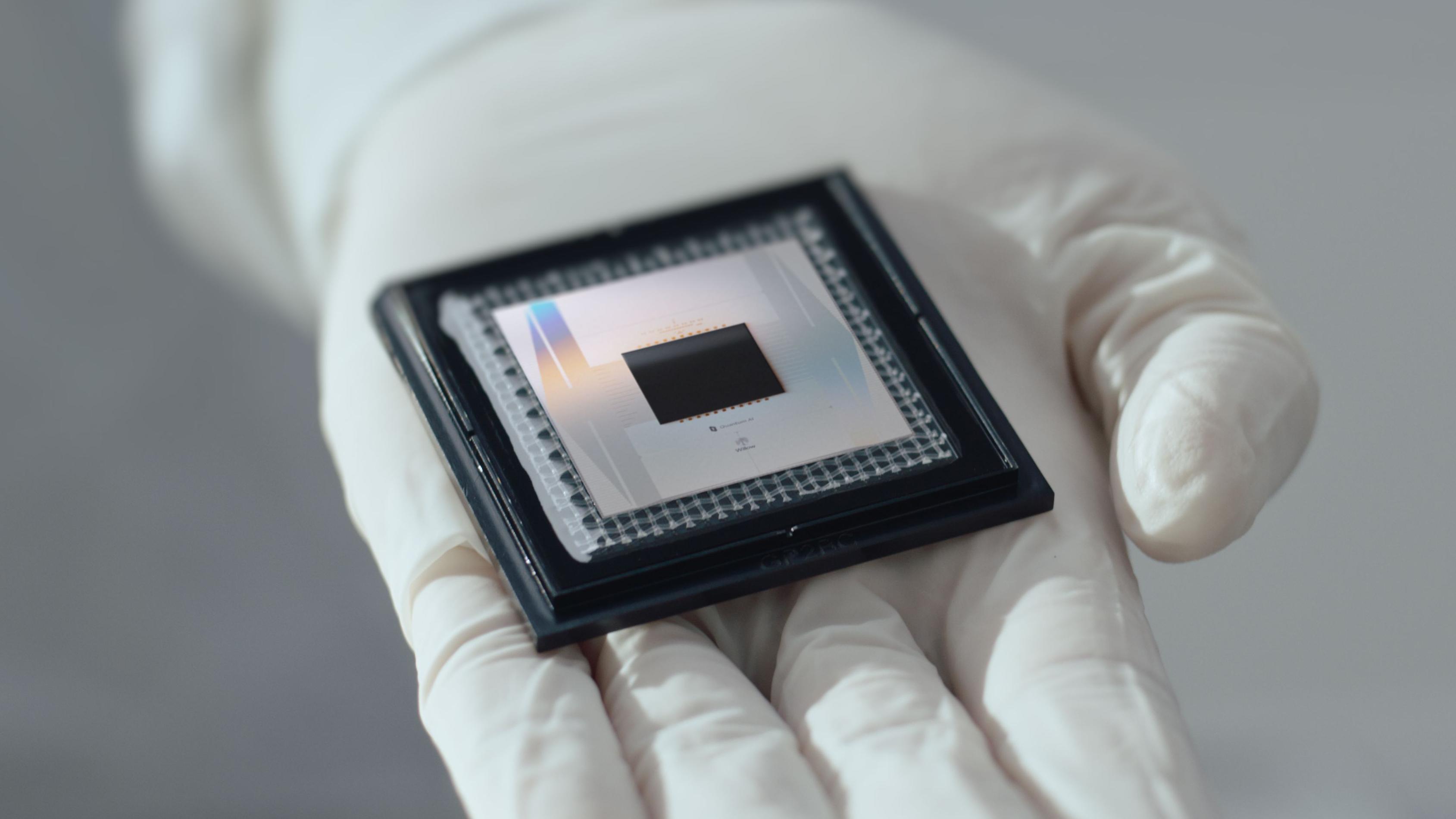
Utilising an IBM quantum computer within a quantum-centric supercomputing workflow — one that integrates quantum processing units (QPUs), CPUs, and GPUs — the research team found helical molecular orbitals for electron attachment, a fingerprint of the half-Möbius topology. The quantum simulation further revealed the mechanism behind the formation of the unusual topology: a helical pseudo-Jahn-Teller effect.
This capability offers tremendous potential for quantum computers to support real-world experimentation. By integrating multiple compute paradigms, quantum-centric supercomputing allows complex problems to be broken into parts and solved according to each system's strengths — achieving what no single compute paradigm can deliver alone.
Significance for the Field
The success of this research signals a step towards a broader vision: using quantum computers as scientific instruments capable of exploring matter at the quantum scale. It opens the door for new ways to explore our world, with implications for drug design, materials science, and our fundamental understanding of molecular electronics.
The research team noted that this proof-of-concept marks the beginning of a new class of quantum-assisted scientific discovery — one in which quantum hardware is not merely a computational tool but an active participant in the scientific method.