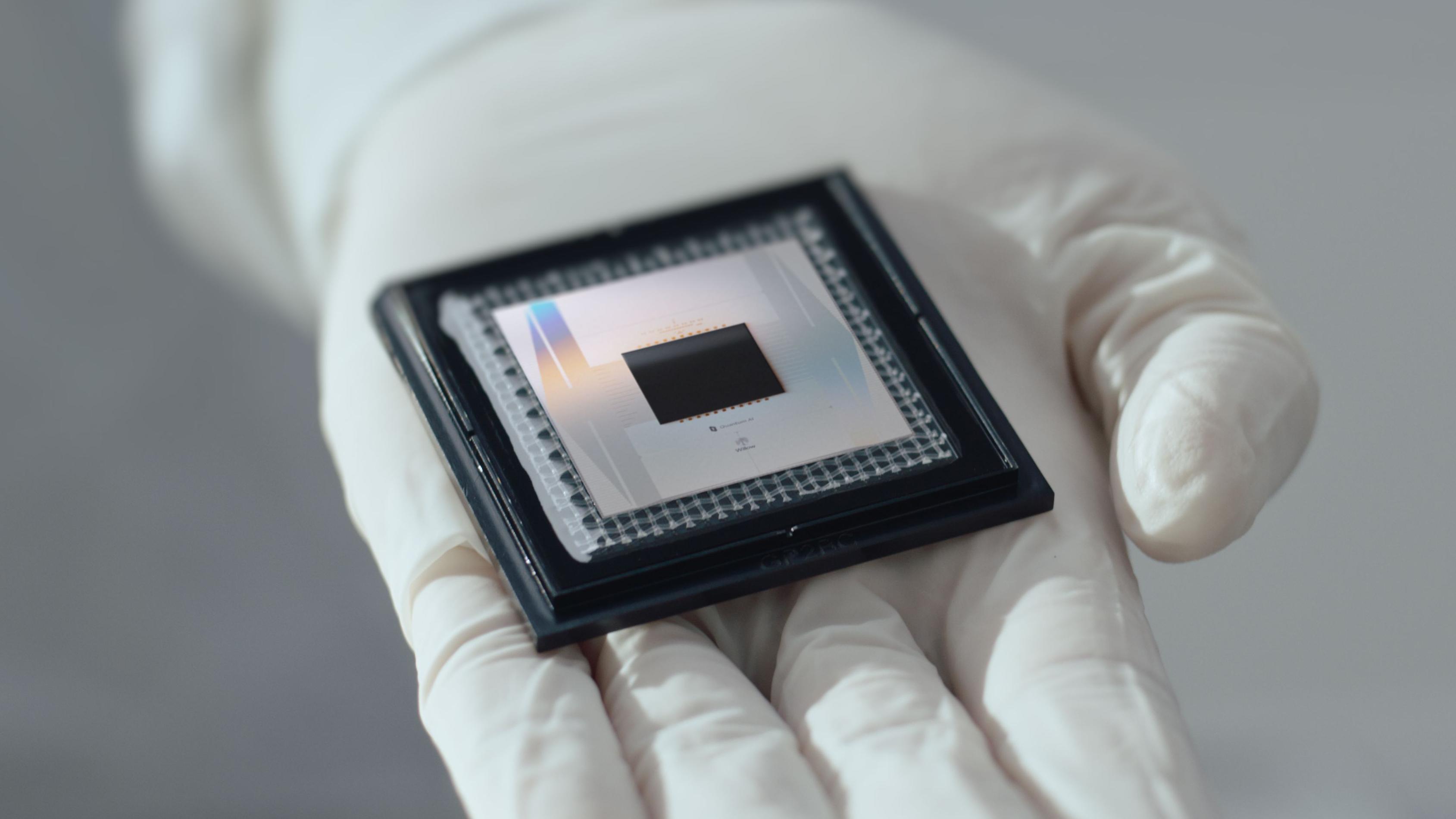
The world's largest financial institutions are making substantial bets on quantum computing, investing in both near-term NISQ applications and longer-term fault-tolerant capabilities. Goldman Sachs, JPMorgan Chase, HSBC, and Barclays have all established dedicated quantum computing teams, and the sector collectively accounts for an estimated 18% of enterprise quantum computing spending globally.
The financial services industry's interest in quantum computing is driven by three primary use cases: portfolio optimisation, derivative pricing and risk modelling, and fraud detection and anomaly detection. Each presents a different profile of near-term versus long-term quantum advantage.
Portfolio Optimisation
Portfolio optimisation — finding the allocation of assets that maximises return for a given level of risk — is a quadratic optimisation problem. For portfolios with thousands of assets and complex constraints, it is computationally expensive for classical computers, and the approximations required by classical solvers can leave significant value on the table.
Quantum optimisation algorithms, particularly QAOA and quantum annealing, offer the prospect of finding better solutions to these problems in practical timeframes. D-Wave, the quantum annealing pioneer, has partnered with Volkswagen Financial Services and Standard Chartered to test quantum optimisation for portfolio rebalancing, with early results showing 15–20% improvement in solution quality for constrained optimisation problems.
"We are not waiting for fault-tolerant quantum computers. We are building quantum-ready workflows today, so that when the hardware matures, we can capture the advantage immediately."
— Marco Pistoia, Head of Quantum Research, JPMorgan Chase
Derivative Pricing and Monte Carlo Simulation
Pricing complex financial derivatives requires Monte Carlo simulation — running thousands or millions of random scenarios to estimate the expected value and risk of a financial instrument. This is computationally intensive, and financial institutions spend enormous resources on Monte Carlo infrastructure.
Quantum amplitude estimation offers a quadratic speedup over classical Monte Carlo — meaning a quantum computer could achieve the same accuracy with the square root of the number of samples. For a simulation requiring one million classical samples, a quantum computer might achieve equivalent accuracy with one thousand samples. Goldman Sachs has published research demonstrating this speedup on small-scale quantum hardware, with projections suggesting commercial viability within five years.
Quantum Security: The Urgent Priority
While quantum computing applications in finance are largely future-oriented, quantum security is an immediate concern. Financial institutions hold vast quantities of sensitive data protected by RSA and elliptic-curve cryptography — both vulnerable to Shor's algorithm on a sufficiently powerful quantum computer.
The HNDL threat is particularly acute for financial data with long sensitivity lifetimes: M&A negotiations, long-term contracts, and strategic planning documents. Major banks have begun cryptographic inventories and are piloting post-quantum cryptography deployments in partnership with NIST-certified algorithm providers.
The Talent Challenge
The financial sector's quantum ambitions are constrained by a severe talent shortage. Quantum computing requires expertise at the intersection of quantum physics, computer science, and financial mathematics — a combination that is extremely rare. Banks are competing with technology companies and national laboratories for a small pool of qualified candidates, driving salaries for quantum computing specialists to levels comparable to senior AI researchers.